
Clinical Research Course Syllabus Explained: What You’ll Actually Learn
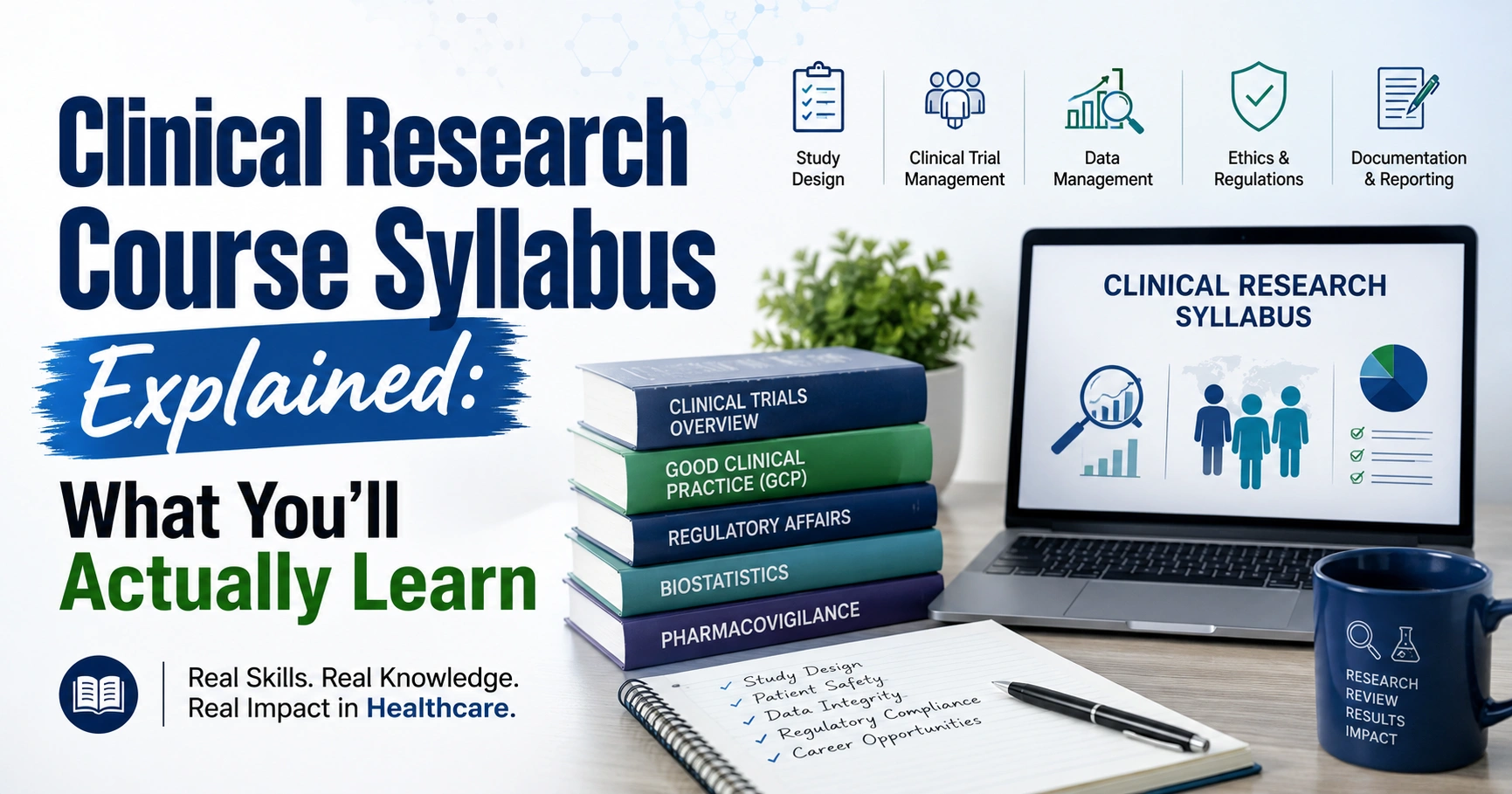
If you’re planning a career in clinical trials or healthcare research, understanding the Clinical Research Course Syllabus is the first step toward making an informed decision. Many aspiring professionals enroll in courses without knowing what they’ll actually study. This blog breaks it down clearly so you know exactly what knowledge and skills you’ll gain throughout your training.
Clinical research is a structured field that combines medical science, regulatory knowledge, and data analysis. A well-designed syllabus ensures that students are industry-ready by the time they complete the course.
Why Understanding the Clinical Research Course Syllabus Matters
Before enrolling in any program, reviewing the syllabus helps you evaluate whether the course aligns with your career goals. The Clinical Research Course Syllabus is designed to provide both theoretical knowledge and practical exposure to real-world clinical trial processes.
A good syllabus prepares you for roles such as Clinical Research Associate (CRA), Clinical Data Manager, or Pharmacovigilance Specialist. It also ensures you understand compliance, ethics, and global standards required in clinical trials.
Core Structure of Clinical Research Training
Most training programs follow a modular approach. If you’re wondering what is included in clinical research training, the syllabus generally covers medical basics, research methodologies, regulations, and data handling.
Here’s a breakdown of the key learning areas:
1. Fundamentals of Clinical Research
This is where your journey begins. You’ll learn what clinical research is, why it’s important, and how it contributes to drug development and healthcare innovation. Topics include:
- History and evolution of clinical trials
- Phases of clinical trials (Phase I–IV)
- Roles and responsibilities in clinical research
This foundational knowledge helps you understand the industry landscape.
2. Clinical Research Course Subjects: Medical and Scientific Basics
A strong understanding of human biology is essential. The clinical research course subjects often include:
- Human Anatomy and Physiology
- Pathology and Disease Understanding
- Pharmacology basics
These subjects help you interpret clinical data and understand how drugs affect the human body.
3. Regulatory Guidelines and Ethics
One of the most critical parts of the syllabus is learning about compliance and ethical practices. You’ll study:
- Good Clinical Practice (GCP)
- International Council for Harmonisation (ICH) guidelines
- Ethical considerations in human trials
- Informed consent process
This ensures that you can conduct research responsibly and legally.
Clinical Research Course Syllabus: Key Modules Explained
To give you a clearer picture, let’s explore the Clinical Research Course Syllabus module-wise. These modules are designed to build your expertise step by step.
4. Clinical Trial Management
This module focuses on how clinical trials are planned and executed. You’ll learn:
- Study protocol design
- Site selection and monitoring
- Trial documentation
- Risk management
It prepares you for operational roles in clinical trials.
5. Data Management and Biostatistics
Data plays a crucial role in clinical research. In this module, you’ll understand:
- Data collection and validation
- Clinical data management systems
- Basics of biostatistics
- Data interpretation techniques
These skills are essential for analyzing trial outcomes accurately.
6. Pharmacovigilance and Drug Safety
Safety monitoring is a key responsibility in clinical research. This module covers:
- Adverse drug reactions (ADR)
- Drug safety reporting
- Risk assessment and management
- Global safety databases
This area opens career opportunities in drug safety and monitoring.
Clinical Research Course Modules Details: Practical Exposure
Understanding theory is important, but practical exposure makes you job-ready. The clinical research course modules details often include hands-on training such as:
- Case studies and real-world scenarios
- Clinical trial simulations
- Report writing and documentation
- Internship or live project work
Institutes like IKYA Global integrate practical sessions to ensure students gain real industry experience, which significantly improves employability.
Clinical Research Syllabus in India vs Global Standards
The clinical research syllabus in India is largely aligned with international guidelines such as ICH-GCP. However, there are some India-specific elements included:
- CDSCO (Central Drugs Standard Control Organization) regulations
- Indian regulatory framework
- Local clinical trial requirements
This ensures that students are prepared for both domestic and global opportunities.
At the same time, global standards are emphasized so that professionals can work with multinational pharmaceutical companies and CROs.
Topics Covered in Clinical Research Course
If you’re still wondering about the depth of learning, here are the major topics covered in clinical research course programs:
- Clinical trial design and methodology
- Regulatory affairs and compliance
- Clinical data management
- Pharmacovigilance
- Medical writing
- Quality assurance
These topics ensure a well-rounded understanding of the clinical research ecosystem.
Explore More:- medical coding training in ameerpet | medical coding training in hyderabad | pharmacovigilance courses in ameerpet
Skills You’ll Gain from the Syllabus
Beyond theoretical knowledge, the Clinical Research Course Syllabus is designed to build practical and soft skills that employers value.
You will develop:
- Analytical thinking for interpreting clinical data
- Attention to detail for documentation and compliance
- Communication skills for coordinating with teams
- Problem-solving abilities in trial management
Programs offered by IKYA Global focus on both technical and professional skill development, helping students transition smoothly into the industry.
Career Opportunities After Completing the Course
Once you complete the syllabus, a wide range of career paths opens up. Some popular roles include:
- Clinical Research Associate (CRA)
- Clinical Data Manager
- Pharmacovigilance Associate
- Regulatory Affairs Executive
- Medical Writer
The demand for trained professionals in clinical research is growing rapidly due to increasing clinical trials and drug development activities worldwide.
How to Choose the Right Course
Not all courses are created equal. When evaluating a program, make sure the syllabus includes:
- Updated industry-relevant modules
- Practical training and internships
- Coverage of global regulatory standards
- Placement assistance
A well-structured syllabus is the backbone of a successful career in clinical research.
Conclusion
Understanding the Clinical Research Course Syllabus gives you clarity on what to expect and how it will shape your career. From medical fundamentals to advanced trial management and data analysis, the syllabus is designed to make you industry-ready.
Whether you’re a life science graduate or a healthcare professional looking to switch careers, a well-structured course can open doors to exciting opportunities in clinical research. Make sure to choose a program that offers both theoretical depth and practical exposure so you can confidently step into the industry.
Frequently Asked Questions
- What is included in a clinical research course syllabus?
It includes medical basics, clinical trial processes, regulatory guidelines, data management, and pharmacovigilance. - Is clinical research a good career option in India?
Yes, it offers strong growth opportunities due to increasing clinical trials and global outsourcing. - Do I need a medical background to join a clinical research course?
Not necessarily. Life science, pharmacy, and biotechnology graduates are also eligible. - How long does it take to complete a clinical research course?
Most courses range from 3 months to 1 year depending on the depth and specialization. - What skills are important for clinical research professionals?
Analytical thinking, attention to detail, communication, and knowledge of regulations are key skills.